Parking Structure Budget Planning for Healthcare Systems

Photo credit: ronstik - Adobe Stock
Last updated: January 22, 2026
Healthcare leaders have many competing demands on their annual budgets. Patient care equipment, staffing needs, technology upgrades, and compliance costs often take priority. But parking garages also require thoughtful budget planning. Your parking structure is one of the first spaces patients, visitors, and staff interact with at your facility. Poor performance impacts experience, safety, revenue, and long-term costs.
To avoid surprises and protect your investment, consider parking garage budget planning as part of both your maintenance budget and your capital budget. Planning ahead gives you control, avoids unexpected closures, and aligns with your facility’s operational goals.
To help guide your planning, the timeline below shows how parking structure inspections, assessments, and budget decisions typically align with a healthcare facility’s annual budget cycle.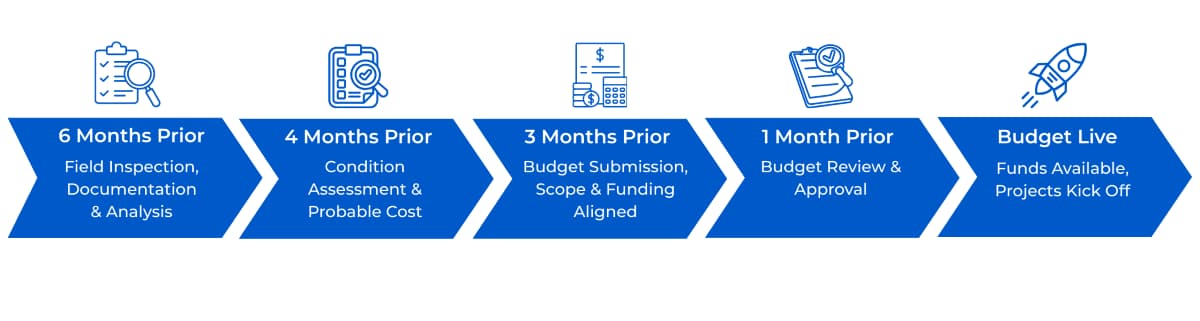
Understand the Different Types of Budgeting
Maintenance Budget
A maintenance budget, typically covered by operation expenses (OPEX), covers routine work that keeps your parking garage functioning. This includes:
- Regular structural inspections and condition assessments
- Predictive maintenance programs
- Minor repairs to concrete, sealants, joint systems, and drainage
- Seasonal work that mitigates weather effects
- Maintenance to waterproofing systems
Predictive maintenance uses data and regular inspection findings to forecast needs over years, not just weeks. It helps you schedule work at times that minimize disruption to hospital operations and improves cost predictability by preventing large, costly repairs.
Maintenance budgets should be reviewed annually and adjusted based on the structure’s age and condition. Planning maintenance allows small issues to be resolved early, before they become large, costly problems.
Capital Budget
A capital budget, or capital expense (CAPEX), is for larger structural investments. These are items that have a multiyear life or require significant resources, such as:
- Waterproofing and corrosion mitigation systems
- Structural strengthening, restoration, or replacement
- Major concrete repair or replacement
Capital planning requires coordination between the facilities and construction teams well in advance. Projects that impact the structure’s core components often need budgeting lead time and alignment with your facility’s broader master plan.
Work with Your Design and Construction Teams
A turnkey approach brings structural engineers and construction partners into budget planning from the start. With one integrated team, owners receive early cost guidance based on current market conditions while reducing coordination gaps. This model is especially valuable in healthcare settings, where no surprises or operational disruptions are critical.
Prioritize Based on Data and Lifespan
Use your maintenance and inspection data to prioritize funds. Focus on components that directly affect safety and usability first. When you can show clear data on structural conditions, it strengthens your budget requests and improves approval rates with finance departments.
Consider creating a multi-year budget forecast. This forecast shows expected needs over three to five years. It allows you to:
- Spread large capital projects over multiple fiscal cycles
- Compare maintenance needs versus replacement costs
- Tie structural work into broader facility goals
Forecasts help you allocate funding where it matters most and avoid last-minute emergency spending.
Include Operational Factors in Your Planning
Hospitals do not have a slow season, so any work that affects access, traffic flow, or parking capacity needs careful timing. Budget plans should include:
- Traffic control measures during construction
- Communication plans for patients and staff
- Contingency funds for scheduling changes
Proactive planning ensures that necessary structural work does not interfere with your facility’s core mission of patient care.
Final Thoughts
Parking garage budgeting for healthcare systems requires a balance between annual maintenance and long-term capital planning. By working with your facility and construction teams, using predictive data, and forecasting structural needs ahead of time, you can protect your structure, control costs, and ensure the garage remains safe and functional year after year.
A thoughtful maintenance and capital project budget plan is not an extra task. It is a strategic investment in your facility’s performance and reputation.
StructureCare’s single-source, turnkey approach delivers engineering-led planning, clearer timelines, and budget predictability, so your parking structure supports patient care instead of complicating it. Our team is here to help with any budgeting questions for the year ahead.
Contact us today to keep your facility safe, compliant, and cost-effective.