Why Spring Power Washing Matters for Structural Health
Last updated: March 17, 2026
For most parking garage owners, the goal is simple: keep your structure in good condition so it lasts as long as possible. Because most parking structures are constantly exposed to the elements, they require a bit more care than other types of facilities, especially in regions that experience freeze-thaw cycles or are located near coastal environments.
These environmental conditions create two distinct but equally important sources of chloride buildup. In northern climates, deicing salts accumulate throughout winter. In coastal regions, airborne salts settle year‑round. If these contaminants are not removed, they can penetrate concrete and contribute to reinforcing steel corrosion over time. Because of this, spring power washing plays a crucial role in protecting the structural health and service life of your parking garage.
The Impact of Chlorides on Concrete Structures
One of the biggest threats to parking structure longevity is chloride buildup. Chlorides are salts, most commonly deicing salts in northern climates and airborne salts in coastal regions, that can penetrate concrete and begin corroding the reinforcing steel inside.
In cold regions, deicing chemicals are essential for safe winter driving. In coastal environments, airborne chlorides settle onto exposed concrete year-round. Over time, these salts migrate through cracks and joints, eventually reaching the reinforcing steel.
When reinforcing steel corrodes, it expands. This expansion creates internal pressure within the surrounding concrete, which can lead to cracking, delamination, and spalling. Much of this process begins below the surface, often before visible damage appears.
By the time deterioration is obvious, repairs are typically more extensive and disruptive. Removing chlorides at the surface helps slow this progression and reduces the risk of corrosion-related damage.
Why Spring is the Right Time
For structures in northern climates, power washing should be scheduled once per year after the last freeze. Washing too early can introduce moisture that may refreeze, while delaying the process allows chlorides more time to migrate deeper into the concrete.
Coastal structures also benefit from annual washing due to ongoing salt exposure. Properties located in northern coastal regions experience both winter deicing salts and year‑round airborne chlorides, creating compounded chloride exposure. Establishing a consistent spring maintenance routine supports long-term structural performance and helps owners stay ahead of deterioration.
Structural Health Starts at the Surface
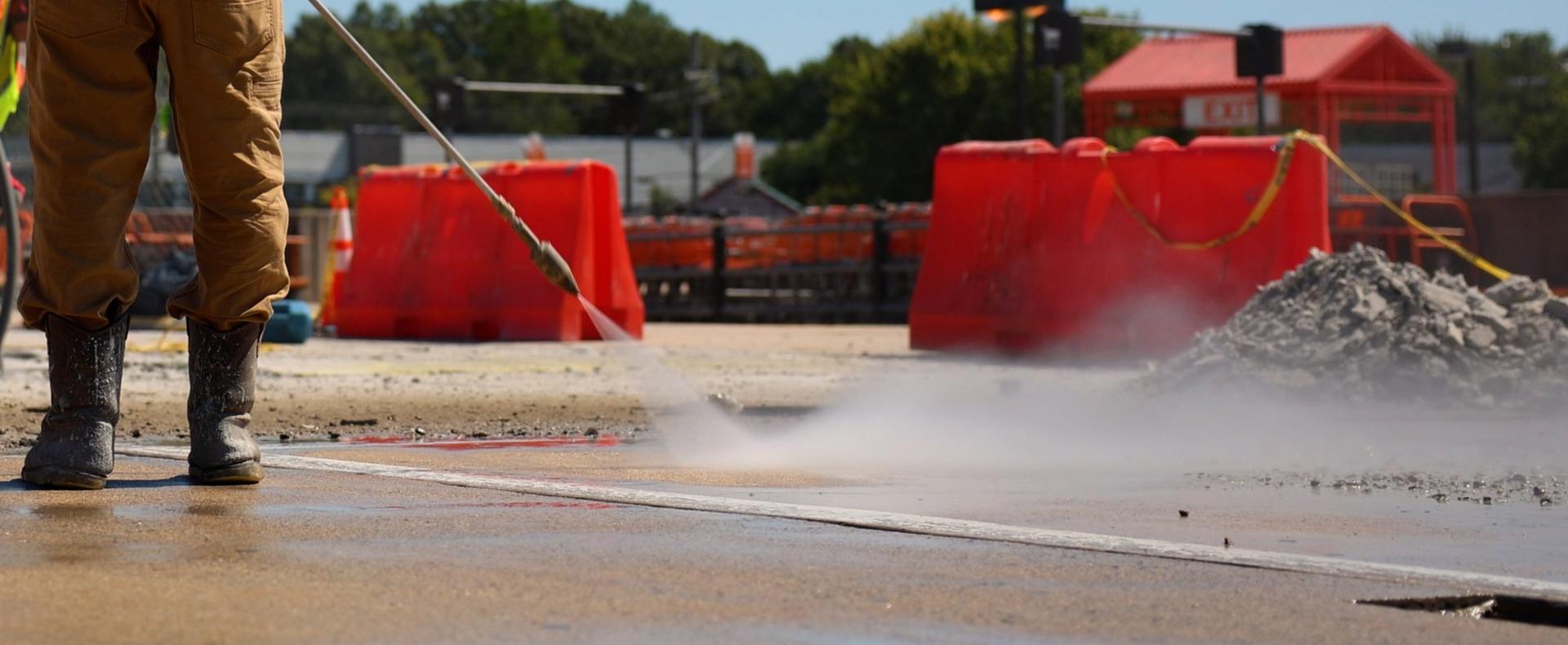
Power washing is a foundational component of preventive maintenance. It supports structural performance by:
- Removing deicing chemicals and airborne chlorides
- Reducing conditions that contribute to reinforcing steel corrosion
- Flushing drains to clear debris and maintain proper water flow
- Improving visibility of cracks, joint distress, and coating wear
- Supporting the longevity of traffic coatings, caulking, and line striping
Cleaning the surface allows facility teams and engineers to better evaluate the condition of the structure. Cracks, joint failures, and localized wear are easier to identify once debris and salt buildup are cleared away. Addressing these conditions early can reduce the likelihood of more significant repair projects later.
Proper Technique Protects Coatings and Joints
Effective power washing requires the right equipment and coordination. Excessive pressure or improper technique can damage traffic coatings, pavement markings, joint sealants, and expansion joints.
Best practices include:
- Using 2,500 to 3,000 PSI
- Selecting a 40 degree or wider fan-tip nozzle
- Holding the nozzle approximately 12 inches from the surface
- Using consistent sweeping motions
- Increasing distance and reducing pressure near sensitive materials
A pre-wash walkthrough is recommended to identify areas that require additional care. It’s also recommended to coordinate power washing timing with facility leadership to ensure traffic control, pedestrian safety, and proper drainage throughout the process.
A Practical Step in Long-Term Structure Protection
Compared to structural repairs or coating replacement, annual power washing is a relatively modest investment, yet it directly supports durability and performance, particularly in environments where salt exposure is unavoidable.
For owners in northern and coastal regions, incorporating spring washing into a broader preventive maintenance plan helps extend service life, improve safety, and reduce the risk of accelerated deterioration.
As mentioned in our previous blog post, spring is also an ideal time to review the overall condition of your parking structure. Pairing annual power washing with a professional structural assessment provides clearer insight into any developing issues and supports informed planning for the year ahead.
StructureCare’s engineering-led approach integrates inspections, restoration, and predictive maintenance planning to help owners protect their parking assets long term. If your property is in a northern climate or coastal area, now is the time to schedule your annual power washing and evaluate your structure’s readiness for the season. Contact us anytime with questions or to plan your upcoming maintenance.