Preparing Parking Structures for Hurricane Season and Severe Storms
Last updated: July 14, 2026
With hurricane season and summer storms underway, it’s a good time to think about how your parking structure could be affected. Heavy rainfall, high winds, flooding, and debris can place added stress on parking structures, particularly those with existing maintenance or drainage concerns.
Here are a few key things to keep in mind as you prepare and check your structure’s readiness.
1. Understand Your Structure’s Exposure to Storms
Every parking structure has different exposure conditions based on location, design, and its surrounding environment. Understanding these risks helps guide preparation efforts before severe weather arrives.
Start by reviewing:
- Proximity to flood prone areas or poor drainage zones
- Elevation relative to surrounding grade
- Exposure to wind corridors or open site conditions
- Condition of waterproofing systems and expansion joints
- History of water intrusion or recurring leak locations
Structures with known drainage limitations or existing deterioration often experience increased impact during heavy rainfall events.
2. Get Your Structure Ready Before a Storm Hits
Once severe weather is on the forecast, preparation should focus on reducing known vulnerabilities and improving the structure’s ability to manage water and wind exposure.
A few practical steps include:
- Review Emergency Action Plans (EAPs) and Emergency Operations Plans (EOPs) and confirm roles, responsibilities, communication protocols, and response procedures.
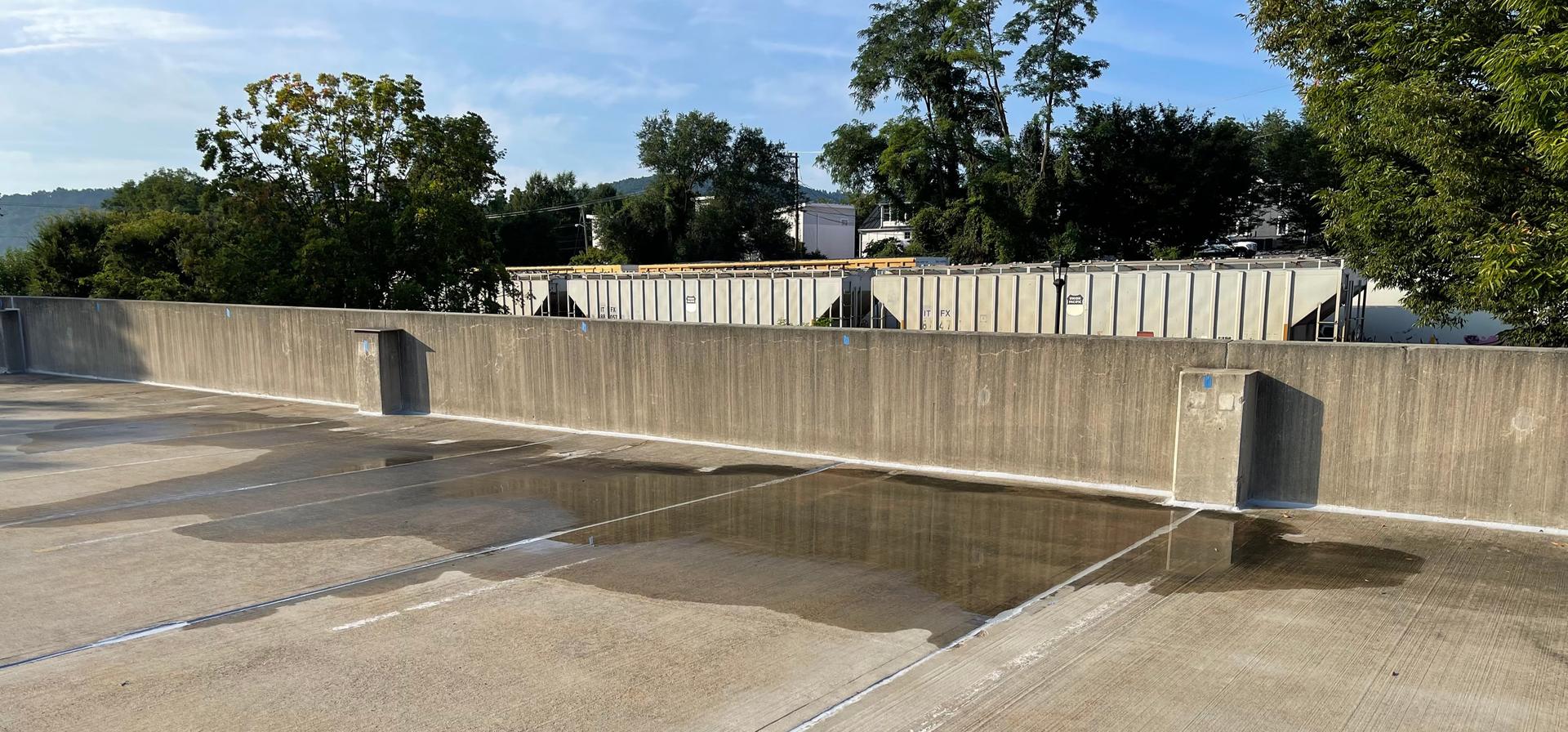
- Clear all drains and drainage systems to ensure water can flow freely
- Remove debris from all deck surfaces
- Secure or inspect loose exterior elements such as signage, lighting, and fencing
- Verify that access control systems and gates are functioning properly
- Review areas with known sealant failure or active leaks
Pay close attention to anything that could let water into the structure. Expansion joints, failed sealants, clogged drainage systems, and compromised waterproofing can allow moisture to reach reinforcing steel. If water intrusion occurs repeatedly, corrosion can develop and accelerate concrete deterioration over time.
3. Prioritize Safety During a Storm
During a storm, priorities often shift from routine maintenance activities to occupant safety and site accessibility. Site conditions should be assessed and managed according to the established emergency procedures and response plans. People's safety should always remain the primary concern during severe weather events.
4. Assess the Structure After the Storm
Once conditions are safe, a post-storm evaluation should be completed by a structural engineer or under the guidance of a structural engineer to identify any damage or changes in condition. Some damage may not be immediately visible, but it can worsen if left unchecked.
Areas to evaluate include:
- New or expanded cracking, spalls, or delamination in concrete
- Evidence of reinforcing steel exposure or corrosion initiation
- Expansion joint displacement or failure
- Sealant damage or separation
- Drainage system performance and evidence of blockage
- Impact damage from wind-driven debris
- Water intrusion or persistent leakage points
Documentation of post-storm conditions is important for prioritizing repairs and helping the structural engineer determine whether additional evaluation, testing, or repairs are required.
5. Address Water Intrusion Promptly
Water intrusion is one of the most significant contributors to parking structure deterioration. When moisture penetrates the concrete system, it can reach reinforcing steel and initiate corrosion, which can lead to cracking, spalling, and reduced structural service life.
Following severe weather, areas with recurring leaks or visible moisture infiltration should be evaluated carefully. Addressing these conditions early can help prevent accelerated deterioration and reduce long-term repair costs.
Supporting Long-Term Structural Performance
Severe weather events are unavoidable, but their impact on parking structures can be managed through preparation and timely response. Structures that incorporate routine inspections, proactive maintenance, and post-storm evaluations are better positioned to maintain safe operations and extend structural service life.
By understanding your structure’s exposure, preparing ahead of storms, and responding quickly afterward, you can reduce risk and support long-term performance.
If you're not sure your facility is storm-ready, our team can evaluate your structure, identify potential vulnerabilities, and provide guidance on emergency preparedness planning. We also offer virtual and in-person presentations on Emergency Operations Plans for parking structures. Contact us to learn more.