What to Expect During a Parking Structure Repair Project
Last updated: April 24, 2026
Parking structure repairs often begin with a visible issue, but the path from that first concern to a completed project involves several coordinated steps.
For parking structure owners, understanding that process upfront makes it easier to plan for timelines, disruption, and decision points along the way. Each phase of the project serves a specific purpose, and how those phases connect has a direct impact on how smoothly the work progresses.
At StructureCare, repair projects follow a consistent approach that carries work from initial assessment through final closeout. While every structure is different, the overall process remains the same.
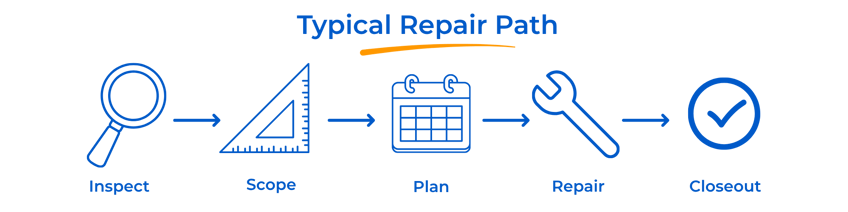
Here’s a breakdown of what a typical parking structure repair project involves:
1. Initial Assessment and Inspection
Every repair project starts with a clear understanding of the structure’s condition. This phase typically includes a comprehensive inspection, where a structural engineer evaluates the structure, documents any deterioration, and identifies areas of concern. Common issues include cracking, water intrusion, joint failure, and concrete deterioration.
While a licensed structural engineer always oversees the inspection process, StructureCare field technicians often support on-site observations and data collection. Depending on the project’s complexity, engineers may be present in the field or provide direct oversight remotely, ensuring every finding is reviewed through an engineering lens.
What matters most during this phase is documentation. Capturing observations, photos, and quantities in a structured system so that nothing is missed and downstream teams can rely on the information is critical.
A thorough assessment sets the foundation for everything that follows. When this step is done correctly, it reduces rework, improves pricing accuracy, and ensures the right repairs are prioritized.
2. Defining the Repair Scope
Once field data is collected, StructureCare engineers evaluate the root cause of the observed conditions. If repair is warranted, our engineers design a long-term solution tailored to the structure, addressing the underlying cause to extend service life and reduce the risk of repeat repairs.
A clear, buildable scope of work includes:
- Identifying repair types and methods
- Quantifying the extent of repairs
- Prioritizing work based on severity and risk
- Developing drawings or repair maps when needed
At StructureCare, engineering, sales, and operations work together closely at this stage. Engineers define what needs to be repaired and why, while project and client teams use that information to plan execution. Clarity here is critical. A well-defined scope allows for cost certainty, smoother contractor coordination, and fewer changes during construction.
For structural repairs, the design phase is just as critical as the work itself. Engineered repair plans define how the repair should be completed before work begins. This approach reduces surprises in the field and ensures repairs perform as intended for the long term.
3. Pre-Construction Planning
Before any work begins in the field, the project moves into a planning phase.
This is where logistics and expectations are aligned:
- Project schedule and phasing
- Site access and traffic flow
- Safety requirements
- Coordination with the owner or the owner's representative
For active parking structures, minimizing disruption is a key focus. Repairs are often phased to keep portions of the garage operational while work is underway.
This step also includes finalizing documentation, confirming quantities, and ensuring all teams are aligned on the plan before execution.
4. Repair Execution
After mobilization, the focus shifts to execution and coordination.
Project Managers lead day-to-day activities, including:
- Scheduling crews and subcontractors
- Managing site logistics and safety
- Coordinating the delivery of materials and equipment
- Communicating progress and updates
Client service and engineering teams remain involved during this phase to provide support. They may review field conditions, answer questions, and validate that repairs align with the original intent. Sometimes, conditions in the field at the time of repair do not completely match what was observed during the initial inspection. When this happens, adjustments are made based on documented findings and engineering guidance.
5. Ongoing Communication and Adjustments
Repair projects are dynamic, which means as work progresses, new conditions may be uncovered or priorities may shift.
Clear communication between all parties is essential. At StructureCare, this includes regular updates, documentation of changes, and alignment between engineering, project management, and client service teams.
When issues arise, early escalation and documentation keep the project moving and prevent small challenges from becoming larger problems.
6. Project Closeout and Documentation
After repairs are completed, the project moves into closeout. This phase includes:
- Final inspections and validations
- Documentation of completed work
- Confirmation that repairs meet project requirements
Accurate closeout documentation is important for long-term parking structure management. It provides a record of what was repaired, where it was completed, and how the structure has improved.
Success after closeout can often be measured by how seamlessly the project was executed. One healthcare client shared after project completion that their staff "barely knew we were there." That level of coordination, communication, and minimal disruption is a key part of the StructureCare difference.
7. Planning for the Future
A repair project is one step in the lifecycle of a parking structure. Ongoing maintenance, periodic inspections, and long-term planning all help extend the life of the structure and reduce the need for major repairs in the future.
Many clients move into a preventative maintenance program after a repair project, using regular assessments to monitor the repairs that were just completed, track condition changes, and proactively plan maintenance and repair activities.
The StructureCare Approach
What sets StructureCare apart is consistency. From inspection through project closeout, every step follows a defined process built around:
- Clear documentation
- Structured handoffs between teams
- Defined roles and responsibilities
- Accountability at each phase
This defined process ensures projects are delivered with the same level of clarity, quality, and coordination across every structure.
Final Thoughts
Parking structure repair projects can feel complex, but they become much more manageable when the process is clear. A successful project relies on understanding the structure, defining the right scope, executing with discipline, and setting the stage for long-term performance.
Knowing what to expect at each stage helps parking structure owners stay informed, make better decisions, and get the most value from their investment. By combining engineering oversight, thoughtful repair design, and coordinated execution, StructureCare delivers parking structure repairs with fewer surprises and better long-term outcomes.
If you have any questions about an upcoming repair project, we’re here to help. Contact us today to start the conversation.